
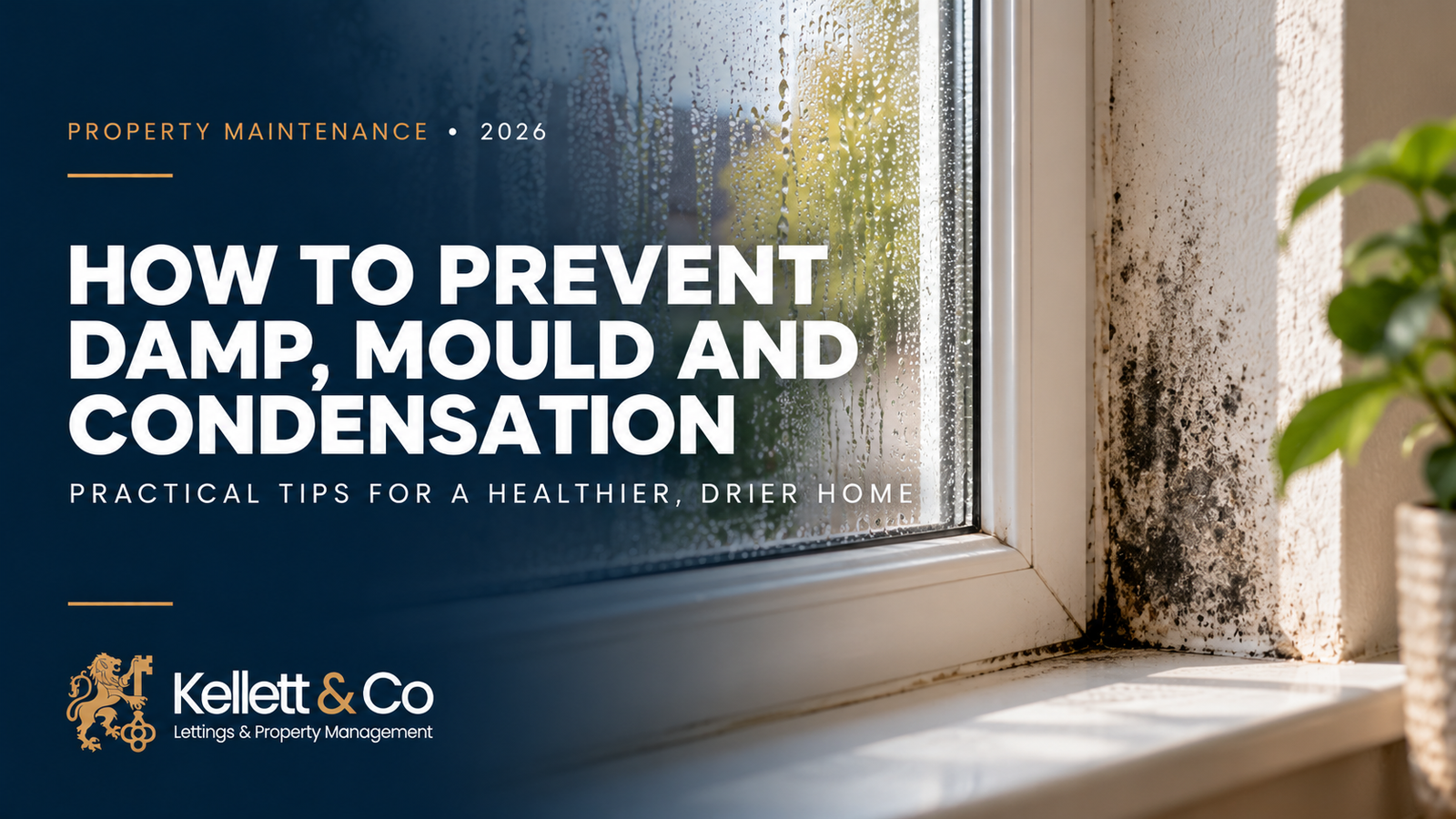
Damp, mould and condensation are among the most common problems found in UK homes, particularly during the colder months. Whether you're a homeowner, landlord or tenant, understanding what causes these issues and how to prevent them can help protect your property and maintain a healthier living environment.
From condensation around bedroom windows to black mould appearing on bathroom ceilings, knowing what to look for can prevent minor problems from developing into expensive repairs.
In this guide, we explain the different types of damp, why mould develops and the practical steps you can take to reduce moisture in your home.
What's the Difference Between Damp, Mould and Condensation?
Although these terms are often used together, they describe different problems.
Condensation occurs when warm, moisture-filled air comes into contact with a colder surface, such as a window, wall or ceiling. The moisture turns into water droplets.
Damp describes unwanted moisture within a building. It can develop because of condensation, leaking pipes, damaged roofing, penetrating rainwater or problems with the building's damp-proofing.
Mould is a type of fungus that grows in damp conditions. It often appears as black, green or grey patches around windows, walls, ceilings and behind furniture.
Identifying the source of moisture is essential because simply cleaning visible mould will not necessarily prevent it from returning.
1. Improve Ventilation Throughout Your Home
Poor ventilation is a major contributor to condensation.
Everyday activities such as cooking, showering, washing clothes and even breathing release moisture into the air.
To improve ventilation:
- Open windows regularly, particularly after cooking or showering.
- Keep window trickle vents open and unobstructed.
- Use bathroom extractor fans when showering.
- Use kitchen extractor fans that vent outdoors when cooking.
- Avoid blocking air vents with furniture or other objects.
- Leave small gaps between large furniture and external walls where practical.
Good airflow helps remove excess moisture before it settles on colder surfaces.
2. Reduce Moisture When Cooking and Showering
Kitchens and bathrooms are two of the biggest sources of moisture in the home.
Simple changes can make a significant difference.
In the kitchen:
- Use lids on pans when cooking.
- Switch on the extractor fan.
- Close the kitchen door where appropriate to limit moisture spreading.
- Wipe away excessive condensation.
In the bathroom:
- Use the extractor fan during and after showering.
- Remove excess water from shower screens and tiles.
- Keep the bathroom door closed while showering if suitable ventilation is available.
- Report or repair leaking taps, showers and pipework promptly.
3. Maintain Adequate Heating
Cold surfaces are more likely to attract condensation when exposed to warm, humid air.
Maintaining suitable indoor temperatures can help reduce this problem.
Where affordable and practical, avoid allowing rooms to become excessively cold for extended periods.
If certain rooms remain unusually cold despite heating, this may indicate an insulation problem or another maintenance issue that requires investigation.
4. Be Careful When Drying Clothes Indoors
Drying wet clothes inside releases additional moisture into the air.
Where possible, dry washing outdoors or use a properly vented or suitable condenser tumble dryer.
If you must dry clothes indoors:
- Choose a well-ventilated room.
- Consider using a dehumidifier.
- Avoid placing wet clothing directly against radiators.
- Keep an eye on condensation around windows and walls.
A dehumidifier can help reduce humidity, although it should not replace adequate ventilation.
5. Check Windows, Gutters and External Walls
Not all damp problems are caused by condensation.
Water can enter a property through building defects, including damaged roof tiles, leaking gutters, defective seals and cracks in external walls.
Look out for:
- Overflowing or blocked guttering.
- Damp patches that appear after heavy rainfall.
- Cracked render or damaged brickwork.
- Water staining around windows.
- Peeling paint or bubbling plaster.
- Persistent moisture on internal walls.
These problems may require professional inspection and repairs.
6. What Should You Do If You Discover Mould?
Finding mould in your home can be concerning, but the most important step is identifying and addressing the underlying moisture problem.
Small areas of surface mould may sometimes be cleaned safely using an appropriate product and the manufacturer's instructions.
However, extensive, recurring or hidden mould should be professionally assessed, particularly where occupants have respiratory conditions or other health vulnerabilities.
Avoid simply painting over mould, as this does not address the underlying cause.
If you live in a rented property, report damp or mould problems to your landlord or managing agent promptly, preferably with photographs.
7. When Should You Seek Professional Help?
Some moisture problems cannot be resolved through everyday ventilation and cleaning.
Consider professional advice if:
- Mould repeatedly returns after cleaning.
- Damp patches appear following rainfall.
- Plaster becomes damaged or starts crumbling.
- Walls remain wet despite adequate ventilation.
- Water is entering through ceilings or external walls.
- You suspect a plumbing leak.
- Damp or mould is extensive or affecting someone's health.
A qualified professional can help establish whether the issue relates to condensation, plumbing, insulation, ventilation or defects in the building.
Final Thoughts
Preventing damp, mould and condensation starts with understanding how moisture enters and moves around your home.
Good ventilation, appropriate heating, reducing unnecessary moisture and maintaining the building can all help prevent problems.
However, remember that damp and mould are not always caused by everyday household activities. Structural defects, inadequate insulation, plumbing leaks and unsuitable ventilation systems can also be responsible.
Addressing the actual cause is the most effective way to protect your home and prevent the problem from returning.
For more practical property advice, maintenance guides and helpful information, explore the Property Maintenance & Repairs section of the Kellett & Co website.
Kellett & Co | Lettings & Property Management | Preston, Lancashire